Free Design Service
 RAPID Turnaround Times
 PRICE BEAT Guarantee
 0800 177 666






 Collections
What is DTF printing? It is a heat transfer method, and the letters stand for direct to film. Your artwork is printed onto a sheet of film, dusted with adhesive powder, cured, then heat pressed onto the garment.
That last step is what buyers actually see. A full colour print sits on cotton, polyester or a blend, and dark fabric is no obstacle. White ink prints behind the colours, so a black tee holds the same artwork as a white one.
There are no screens to make either, which changes the maths on short runs. Below is the process stage by stage, the fabrics it suits, and how it compares with DTG and screen printing.
Quick Answer
Direct to film printing turns your artwork into a transfer sheet, then bonds it to fabric with heat.
- Print the design in reverse onto DTF film, colours first, white ink behind.
- Coat the wet ink with hot melt adhesive powder and shake the excess off.
- Cure the sheet so the powder melts into the ink.
- Heat press the transfer onto the garment, then peel the film away.
How Does DTF Printing Work?
Here is the DTF printing process, stage by stage. It starts on a computer, not on the garment. Artwork is mirrored and sent to a printer loaded with PET film.
Epson describes the print order plainly on its direct to film pages: the colours print first, then white ink goes down behind them. White ink is the reason the method handles navy, black and charcoal. Colour alone on dark cotton looks dull, and the white layer stops that happening.
Powder comes next. A fine hot melt adhesive is spread across the wet ink, then the excess is shaken off. It sticks only where ink has landed, so the design keeps its exact shape.
A curing unit melts that powder into the ink layer. What comes out is a finished transfer, dry to the touch and ready to store or post.
Last comes the heat press. Film goes design side down on the garment, the press closes for a few seconds, then the film peels away. A thin, flexible print stays bonded to the fabric.
One method covers most of a custom clothing and apparel range, from tees to hoodies to team kit.
Which Fabrics Suit DTF Transfers?
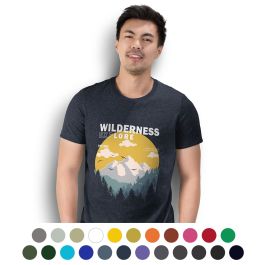
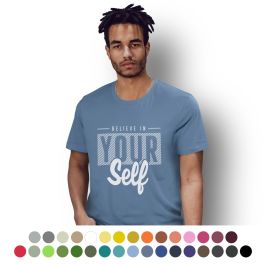
Cotton, polyester and poly cotton blends all take DTF transfers. Epson notes that no pre-treatment is needed, which is where this method pulls ahead of direct to garment printing. Awkward shapes such as canvas shoes and bags work too.
Garment weight still matters. A midweight cotton tee gives the flattest surface, so fine detail keeps its edges. Element Unisex T-Shirt is a 150gsm combed cotton tee in sizes XS to 4XL, which suits event handouts and staff kit alike.
Heavier cotton feels closer to retail. Original Men's T-Shirt runs 180gsm in 100% cotton, with a ribbed rounded collar and short hemmed sleeves. It arrives loose packed, so sorting a bulk order by size stays simple.
Treated and textured fabrics are the ones to check first. Acid wash finishes, waterproof coatings and heavy rib all change how a transfer beds in. Ask for a pressed sample on the exact garment before committing to a big run.
DTF vs DTG: What Is the Difference?
DTG prints ink straight into the fabric, so the design becomes part of the garment. DTF prints onto film first, then bonds that print to the surface. Both give full colour without screens.
Pre-treatment is the practical split. DTG needs a pre-treat coat on dark garments before white ink will hold. DTF skips that step, which removes a stage and a drying window from the job.
Fabric range is the second split. DTG is happiest on high cotton content, while DTF handles polyester, nylon and blends just as well. That matters for sports tops, hi vis and workwear.
Feel is where DTG wins. A DTG print sits in the fibres and is barely noticeable under your hand. A DTF print sits on top, so you can feel a thin layer, although a good press keeps it soft.
Neither method replaces the other. Artwork, fabric and quantity decide it.
DTF vs Screen Printing
Screen printing pushes ink through a mesh stencil, one screen per colour. Setup is where the cost sits. Once those screens exist, a long run gets cheap quickly, and a two colour logo across hundreds of tees is hard to beat.
DTF has no screens at all. A ten colour photograph costs the same to set up as a single letter, so short runs and detailed artwork are its natural home. Embroidery and screen printing still have their place, and our comparison of those two methods explains when each one wins.
Durability is closer than people expect. A cured screen print is very tough, and a well pressed transfer holds up through repeated washing when care instructions are followed. Washing inside out on a cool cycle helps both.
Here is the short version across all three methods.
| Method | Best for | Colour limit | Setup per colour | Fabric range |
|---|---|---|---|---|
| DTF | Short runs, full colour art | None | None | Cotton, polyester, blends, nylon |
| DTG | Soft feel on cotton | None | None | Mostly cotton |
| Screen printing | Long runs, simple logos | One screen per colour | Yes | Wide, ink dependent |
What Affects DTF Printing Cost?
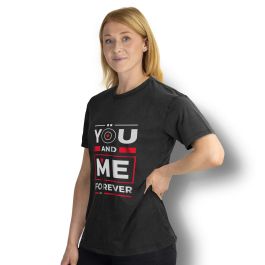
Dynamic Gift quotes apparel per job, so there is no fixed rate card to read. Our t-shirt pages name what moves the number: garment quality, branding method, print size, order quantity and design complexity.
Quantity does most of the work. Screen printing spreads its setup across the run, so unit price drops steeply as numbers climb. DTF carries little setup to spread, so its price curve is flatter and it stays competitive on small orders.
Print size is the other lever. A left chest badge uses a fraction of the film that a full back print needs. Faded Unisex T-Shirt lists print areas from 95mm x 60mm up to 280mm x 350mm, which covers both ends of that range.
Artwork complexity barely registers. Gradients, photographs and fine text add nothing to a transfer setup, which is the opposite of how screen printing prices behave.
DTF Printing NZ: What to Ask For
Ask any New Zealand supplier three questions before you order. Which branding method suits this artwork, what the print area limits are on that garment, and whether a sample can be pressed first.
Dynamic Gift brands its apparel with screen printing, embroidery, transfer printing and full colour digital printing. Which one runs on your job depends on the fabric, the artwork, the quantity and the finish you want. Our team names the method before anything reaches production.
Ready to price a run? Ask Dynamic Gift for a free quote on any custom t-shirts or apparel, and request a sample at the same time. Quotes come back in NZD with an obligation free artwork proof.
Frequently Asked Questions
What Is DTF Transfer Film?
DTF transfer film is a thin PET sheet that carries the print before it reaches the garment. Ink is laid on it in reverse, adhesive powder is fused to that ink, and the sheet is pressed onto fabric. Film peels away afterwards and is discarded, so it is a carrier rather than part of the shirt.
How Long Does a DTF Print Last?
A well pressed print holds up to regular washing without cracking or lifting. Wash the garment inside out on a cool cycle, keep it out of the tumble dryer, and keep a hot iron off the print. Follow the care label and treat the print as you would any transfer.
Can DTF Print on Dark Garments?
Yes, and that is one of its main advantages. A white ink layer prints behind the colours, so the design does not sink into dark fabric. Black, navy and charcoal tees print the same way white ones do, with no pre-treatment coat needed first.
Is DTF Printing Good for Small Orders?
It suits them well. No screen is made and nothing is set up per colour, so a small run is not penalised the way screen printing penalises it. Full colour artwork costs no more to prepare than a single colour logo, although long simple runs still favour screen printing on unit price.
Which Garments Should I Test First?
Test anything with a coating, a heavy texture or a stretchy technical knit. Waterproof jackets, hi vis gear, acid wash finishes and heavy rib all change how a transfer beds in. Faded Unisex T-Shirt is an acid wash example, and its listing names Screen Print, Colourflex Transfer and Embroidery, so ask for a pressed sample.
What Branding Does Dynamic Gift Use on Apparel?
Apparel is branded with screen printing, embroidery, transfer printing and full colour digital printing. Which one runs on your order depends on the garment, the artwork and the quantity you need. Send the design through and our team recommends a method, then emails an artwork proof with design help included.


 22 McColl Street, Newmarket, Auckland 1023