 Free Design Service
 RAPID Turnaround Times
 PRICE BEAT Guarantee

 0800 177 666






 Collections
Figuring out how to start a clothing brand usually begins with a sketchbook of tee ideas and no experience of bulk runs. In New Zealand, the simplest route is printing your designs on quality blank garments. You pick the blanks, choose a print method that suits each design, then order one small run with your sizes split out.
Because the blanks already exist, you skip garment specs, fabric sourcing and factory samples. From sketch to sale it comes down to six steps, the last covering the NZ labelling and GST rules for selling clothes.
Quick Answer
Begin with blanks, not a factory. Then follow six moves:
- Turn your best sketch into a print-ready file.
- Choose one or two blanks in the right fabric and size run.
- Match the print method to each design.
- Split your sizes and confirm the minimum on the quote.
- Approve the proof before anything prints.
- Check labels and GST before you sell.
Print on Demand, Blanks or Cut and Sew?
There are three common ways to make your own clothing brand. They differ in when garments get made and how much you design from scratch.
- Print on demand: each piece is printed only after a customer orders it.
- Blanks printed in bulk: finished garments are decorated in one run, and you hold the stock.
- Cut and sew: a factory cuts the fabric and makes up each garment, while you supply the design and materials.
Many founders start by asking how to find a clothing brand manufacturer, but cut and sew needs specs, fabric and samples first. If you are working out how to start your own clothing brand on a small budget, blanks get you to real stock without any of that. Every style in our AS Colour wholesale range can be supplied blank or branded, so the garment is ready and only your design is added.
What You Need to Start a Clothing Line
A first quote moves fastest when these five things are ready.
- Artwork: a clean file is best, though a sketch is enough to begin.
- A blank: one tee or hood style for the first drop.
- Colours: the garment colour, plus the ink or thread colours.
- Quantity and sizes: a real total, split by size.
- A date: the day the stock needs to land.
We do not list garment prices online, so our quote form asks for products, quantities and print details instead. Add your contact details too, so our team can act on the request quickly.
How to Start a Clothing Brand NZ, Step by Step
Each step feeds the next, so take them in order.
Step 1: Get Your Artwork Print Ready
Learning how to design your own clothing line starts on paper, but a printer needs a digital file. AI, EPS and PDF files are fastest for us, with images embedded and fonts outlined. A PNG, JPG or PSD still works, because our designers redraw it by hand into a vector, though a JPEG needs to be over 600px.
No file yet? Our free artwork service works from a sketch, a design file or even a written description. Keep the design simple as you draw, because clothing brand logos with clear shapes and little fine detail reproduce more sharply on fabric.
Embroidery and some print methods need an even simpler mark, so our merchandise logo guide suggests keeping a one colour version on file.
Step 2: Choose Blanks People Want to Wear
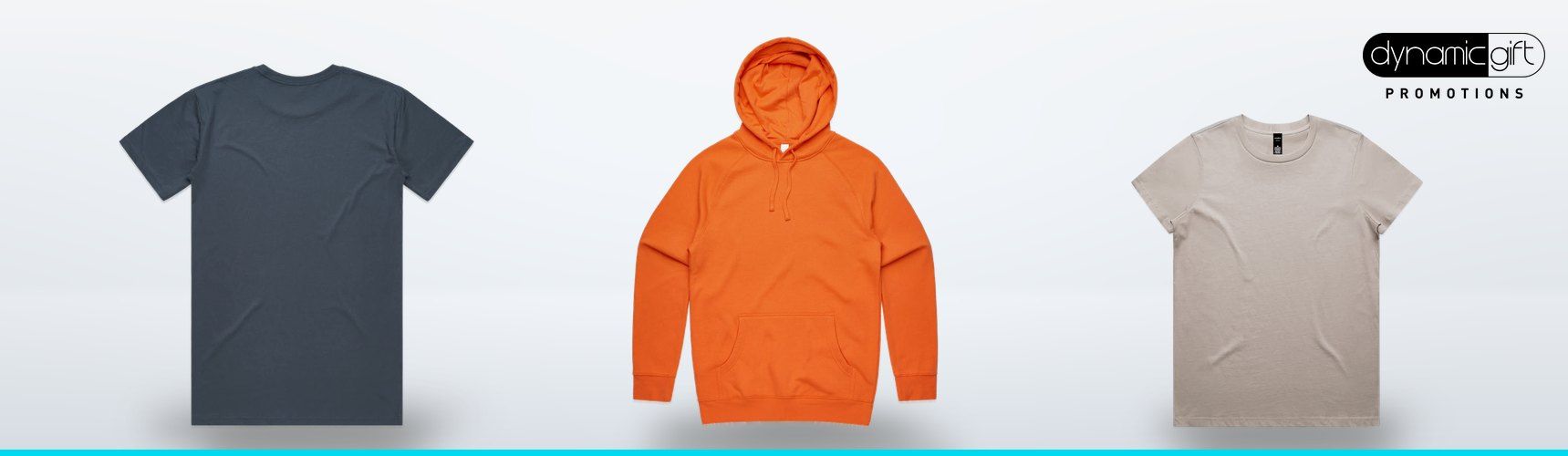
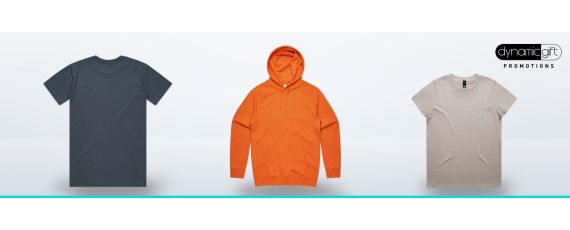
Pick one or two blanks for your first drop, not a whole range. Our AS Colour men's staple tee is 180 GSM, 100% combed cotton, in more than 70 colours from XS to 5XL. For women's cuts, our AS Colour women's maple tee uses the same 180 GSM combed cotton in a regular fit, sized XS to 3XL.
For a layer people wear all year, our AS Colour supply hood is a mid weight hood sized XS to 5XL. Its fleece is 80% cotton and 20% polyester, with an anti-pill finish. All three can be supplied blank or branded, with full colour print, embroidery and screen printing listed for each.
Step 3: Match the Print Method to the Design
Choose the method around your artwork and fabric, not the other way round. This table matches common designs to a method.
| What your design looks like | Method to ask for | Why it suits |
|---|---|---|
| Bold logo or lettering in a few flat colours | Screen printing | Suits flat cotton, with clean edges and strong colour |
| Small chest logo on a hood | Embroidery | Raised stitching with no print surface to crack or peel |
| Gradient, fine detail or lots of colour | Full colour digital print | Handles fine detail and many colours |
Each colour in a screen print usually needs its own screen, so a one colour design is cheaper to set up than a four colour one. A full colour transfer needs no screens at all, which is why our guide to DTF printing points short runs of detailed art that way.
You can also mix methods on one garment. Our screen printing vs embroidery comparison gives the example of an embroidered chest logo with a larger printed design on the back.
Step 4: Split Sizes and Settle the Quantity
The staple tee, maple tee and supply hood pages publish no minimum, since we price each job by quote. Put your real total and size split into the quote form, and ask what the minimum is for your print method. Check the size runs as you split, because the maple tee stops at 3XL while the men's tee and the hood reach 5XL.
Quantity still shapes the price. Our guide to screen printing costs and minimums shows why: setup is mostly a fixed cost, so it shrinks per shirt as the run grows.
Step 5: Approve the Proof Before Anything Prints
Fill in our quote form with your chosen products, quantities and a short note on the print. Our team emails back a full quote and a free artwork proof, then amends the design until you are happy. Nothing goes into production until you approve that artwork, so check placement, spelling and colours closely.
Most of our products can be sampled free, so ask whether your blank is one of them before the run. If launch day is close, put the date in your first message, since all three blank pages note a rush service.
Step 6: Check Labels and GST Before You Sell
Paperwork is the least exciting part of how to start a clothing business, but two NZ rules come before your first sale. New clothing sold here needs a care label, a country of origin label and a fibre content label, under rules the Commerce Commission enforces. They cover shops, online auction sites, markets and stalls.
Responsibility sits with the seller, even when the garments came from a wholesaler, so check the labels on your sample before the run prints. GST is the second rule, and starting a business does not trigger it on its own. Inland Revenue requires registration once your turnover reaches $60,000 over 12 months, or you expect it to.
Who Can Print Your First Drop?
We can, from our base in Newmarket, Auckland, as a business that is New Zealand owned and operated. At Dynamic Gift, every quote comes back in New Zealand dollars, together with a free artwork proof.
Found a lower like for like New Zealand quote, with all costs to your door included? Our Price Beat Guarantee means we will beat it.
When the first drop sells, our custom t-shirt range adds sports, hi viz and acid washed styles for the next one.
A sketch is enough to start your first clothing run quote, as long as your sizes, quantity and launch date come with it.
Frequently Asked Questions
What does starting a clothing brand cost?
For a label built on blanks, the first run's price depends on the blank, the print method, the colours, the print positions and the quantity. We price garments by free quote rather than listing them online. Screen setup is mostly fixed, so a bigger run usually lowers the cost of each shirt.
Is there a minimum order for a first run?
The staple tee, maple tee and supply hood pages do not publish one, because we price every job on its own. The minimum depends on the garment and the print method, so ask for it in your quote request. Give us your true total and size split, and the answer comes back built around your numbers.
Can I send a hand-drawn sketch instead of a file?
Yes, our free artwork service accepts a sketch, a design file or just a written description. Our designers redraw it into a vector file, then email a proof for you to check. You can ask for changes until the design looks right, and nothing prints until you approve it.
How to start a small clothing business from home?
Keep the first run small enough to store at home, with one or two designs on one blank. Printed stock arrives finished, so there is no sewing or pressing to do. Before selling online or at markets, check each garment carries care, origin and fibre labels, and keep an eye on the $60,000 GST threshold.
Can I order the blanks without any printing?
Yes, the staple tee, maple tee and supply hood can each be supplied blank or branded. Plain blanks suit a designer testing fit and fabric first, or one who already has a printer. Send the styles, colours, sizes and quantity, and we quote the plain garments just like a printed order.


 22 McColl Street, Newmarket, Auckland 1023
