Free Design Service
 RAPID Turnaround Times
 PRICE BEAT Guarantee
 0800 177 666






 Collections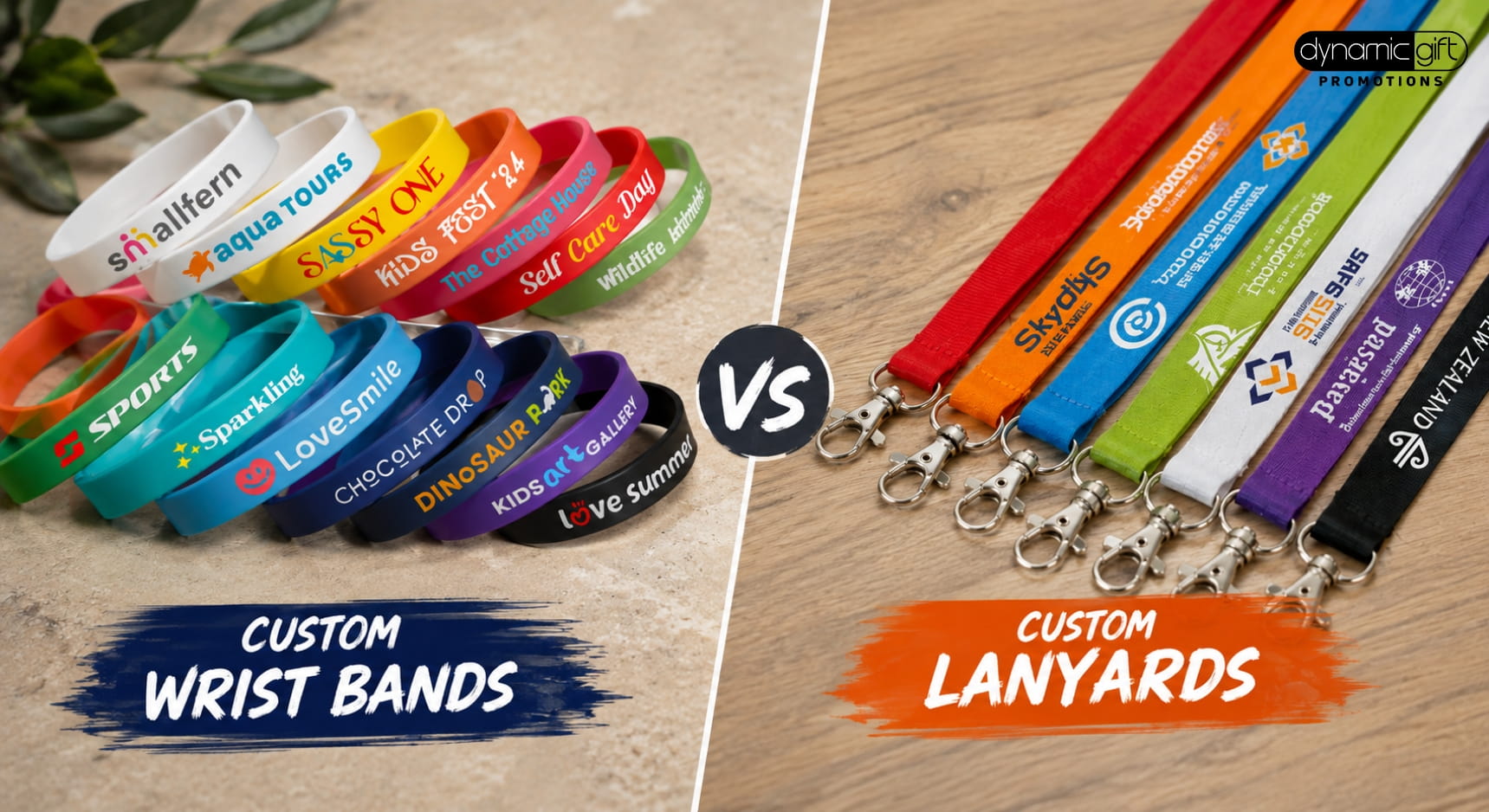
The right event accessory can make identification, access management and branding much easier. Custom wrist bands provide a compact option for controlling entry and distinguishing attendee groups, while lanyards keep passes, credentials and identification clearly visible. Both can also carry your branding throughout an event. The better choice depends on your event type, duration, security requirements and what attendees need to carry or display.
Key Takeaways
- Custom wrist bands are practical for entry control, attendee identification and different access levels.
- Lanyards are ideal when badges, passes or credentials need to remain visible.
- Wristbands can suit festivals, concerts, sporting events and other high-volume gatherings.
- Lanyards work particularly well at conferences, exhibitions and corporate events.
- Colours can be used to distinguish attendee categories or access levels.
- Branding can turn functional event accessories into an additional promotional touchpoint.
- Some larger events can benefit from using wristbands and lanyards together.
Table of Contents
- Understanding Custom Wrist Bands and Lanyards
- Why the Right Event Accessory Matters
- Custom Wrist Bands vs Lanyards: Key Differences
- Where Wristbands and Lanyards Work Best
- How to Choose the Right Event Accessory
- Final Thoughts
- Frequently Asked Questions
Understanding Custom Wrist Bands and Lanyards
Wristbands and lanyards perform similar roles in event management, but they do so in different ways.
What Are Custom Wrist Bands?
Custom wrist bands are worn around the wrist and can be used to identify attendees, indicate entry permissions or separate different ticket and access categories.
Depending on the event, different colours or designs can represent:
- General admission
- VIP attendees
- Staff
- Volunteers
- Specific event days
- Different activity groups
- Restricted access areas
Because they remain on the attendee's wrist, there is generally no need to search through a bag or pocket to find an entry credential.
What Are Event Lanyards?
Lanyards are worn around the neck and can carry items such as name badges, identification cards and event passes.
Their prominent position makes them particularly useful when organisers need attendee information to remain easy to see.
They are commonly used at:
- Conferences
- Trade shows
- Exhibitions
- Corporate functions
- Training sessions
- Networking events
Lanyards also provide space for repeated branding along the strap, making them both a functional accessory and a visible piece of event merchandise.
Why the Right Event Accessory Matters
Event accessories may seem like a minor detail, but they can influence how smoothly people move through a venue and interact with one another.
Simplify Attendee Identification
Clear identification can help staff quickly recognise different attendee groups.
For example, colour-coded custom wrist bands can make access categories easier to identify at a glance, while lanyards with printed badges can show an attendee's name, organisation or role.
Support Access Management
At events with multiple zones, organisers may need a straightforward way to distinguish who can enter particular areas.
Wristbands can provide an easily visible indicator without requiring attendees to repeatedly present a separate ticket or pass.
Improve Networking
For conferences and business events, identification serves another purpose. Visible name badges attached to lanyards can help attendees identify each other and start conversations more easily.
Extend Event Branding
Event accessories can become part of the wider visual identity.
Brand colours, logos and event artwork can be coordinated across wristbands, lanyards, signage and other materials to create a consistent look.
Custom Wrist Bands vs Lanyards: Key Differences
The right option depends on what attendees need from the accessory.
Visibility
Wristbands are easy for staff to check when attendees approach an entry point, but their smaller format limits the amount of information that can be displayed.
Lanyards position credentials higher on the body, making names, organisations and attendee categories easier for other people to see.
- Best for quick access checks: Wristbands
- Best for displaying credentials: Lanyards
Branding Space
Both options can support custom branding, although the available space differs.
Wristbands suit concise branding such as a logo, event name or short message. Lanyards provide a longer surface that can repeat logos or text along the strap.
Comfort and Convenience
Once fitted, a wristband generally requires little attention from the wearer. This can make custom wrist bands convenient for events where attendees are moving between activities throughout the day.
Lanyards are also easy to wear and have the added advantage of carrying badges or cards without requiring pockets.
Information Capacity
If you only need to identify an attendee category or access level, a wristband may be sufficient.
If you need to display:
- Attendee names
- Company names
- Job titles
- Photographs
- Access credentials
- Exhibitor details
a lanyard and badge combination is generally more practical.
Where Wristbands and Lanyards Work Best
Consider the nature of your event before deciding.
Festivals and Concerts
Wristbands can work well when entry and access control are the main priorities. Different colours can distinguish ticket types, event days or restricted areas.
Sporting Events
For competitions, tournaments and community sporting events, wristbands can help identify participants, spectators, staff or different access groups without interfering with movement.
Conferences
Lanyards are particularly useful because attendees often need visible name badges for networking and identification.
Trade Shows and Exhibitions
Exhibitors, visitors, organisers and media representatives may all need different credentials. Lanyards can make these categories easy to display while also providing branding opportunities.
Corporate Functions
Lanyards can help employees, visitors and guests identify each other, particularly at large events where not everyone has met previously.
Multi-Zone Events
Some events may benefit from using both.
An attendee could wear a lanyard displaying their name and organisation while a wristband indicates access to a VIP area, specific session or additional activity.
How to Choose the Right Event Accessory
Work through your event requirements before placing an order.
1. Identify the Primary Purpose
Ask what the accessory needs to achieve. Is it mainly for entry control, attendee identification, networking, branding, carrying credentials, or separating access levels?
The answer will quickly narrow down your options.
2. Consider the Event Duration
A short conference may have different requirements from a multi-day festival. Think about how long attendees will wear the accessory and whether it needs to remain comfortable and functional throughout that period.
3. Determine What Information Is Needed
If staff only need to identify a ticket category, a coloured wristband may work well. If attendees need names and professional details displayed, lanyards provide more room.
4. Plan Your Colour System
If colours represent different attendee groups, make the system clear and consistent. Avoid using colours that are too similar, particularly when staff need to distinguish access levels quickly.
5. Consider Branding
Keep artwork simple and legible. For custom wrist bands, prioritise essential information because space is limited. With lanyards, repeated logos or brand names can provide visibility without overcrowding the design.
6. Order With Your Event Timeline in Mind
Allow enough time for product selection, artwork preparation, approval, customisation and delivery. For large events, build extra time into the schedule rather than leaving branded accessories until the final stages of planning.
Final Thoughts
Choosing between lanyards and custom wrist bands comes down to what needs to be visible and how attendees will move through your event.
Wristbands provide a straightforward option for identifying access levels and attendee categories, making them particularly useful for festivals, sporting events and high-volume gatherings. Lanyards are better suited to situations where names, credentials or passes need to remain clearly displayed, such as conferences and trade shows.
For complex events, the best answer may be both. Using each accessory for a different purpose can create a clearer identification and access system while reinforcing consistent event branding.
For businesses and event organisers looking for customised event accessories, Dynamic Gift offers branded lanyards and promotional products suitable for events, workplaces and campaigns. With customisation options to suit different branding and event requirements, the team can help you put together a practical solution. Explore the range and request a quote for your next event.
Frequently Asked Questions
It depends on the event. Wristbands are useful for quick attendee identification and access control, while lanyards are better when names, badges or credentials need to remain visible.
Custom wrist bands can suit festivals, concerts, sporting events, community activities, multi-day events and other situations where organisers need an easy way to identify attendees or access categories.
Lanyards keep name badges and credentials visible, which can help with identification and networking. They also provide space for event or sponsor branding.
Yes. A lanyard can display a person's identity or organisation while a wristband indicates ticket type or access permissions. This can be useful for events with multiple attendee categories or restricted areas.
Keep the design simple. Depending on the event, you might include a logo, event name, short message or other essential identifier. Avoid overcrowding the limited print area.
Choose colours that are easy to distinguish from one another if they represent different access levels or attendee groups. Brand colours can also be incorporated where they do not interfere with the identification system.


 22 McColl Street, Newmarket, Auckland 1023