Free Design Service
 RAPID Turnaround Times
 PRICE BEAT Guarantee
 0800 177 666






 Collections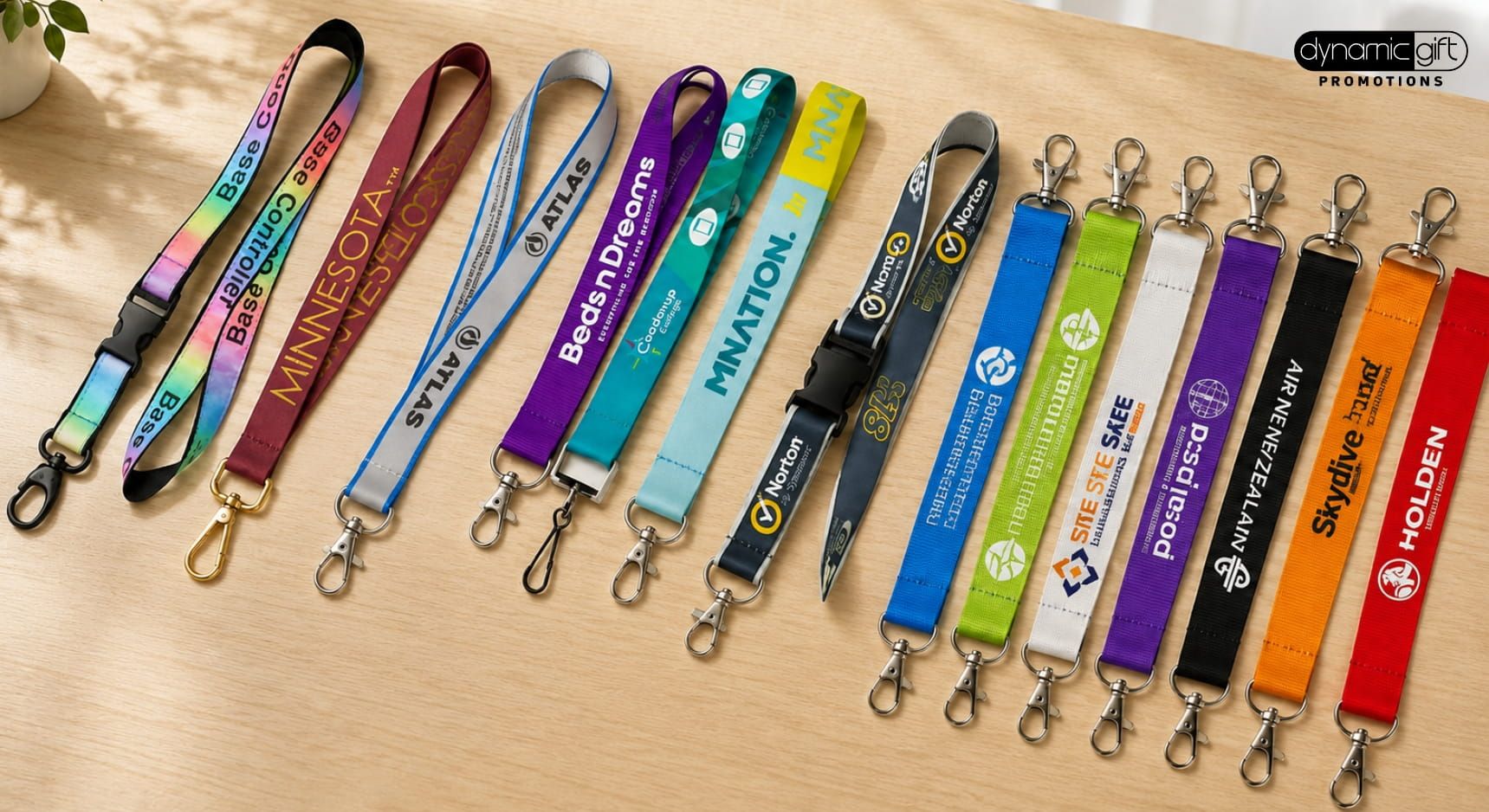
Lanyards are one of the smallest line items on a conference budget and one of the most visible products at the event itself. Every attendee wears one for the full day, which makes it a walking brand impression, an access-control tool, and, if you get the colour-coding right, a way to manage crowd flow without a single extra staff member. Get the planning wrong, though, and you're looking at a last-minute reprint or a badge that keeps flipping the wrong way round. Here's a complete checklist to plan it properly.
Step 1: Define Your Requirements
Before choosing colours or materials, nail down the basics that shape everything else:
- Badge holder type: vertical or horizontal, and whether it needs a resealable pocket for a printed badge or a slot for a swipe or RFID card.
- Attachment style: bulldog clip, swivel hook, lobster claw, or a J-hook. Swivel hooks suit horizontal badges best, while a bulldog clip works for most vertical holders.
- Width: 15mm and 20mm are the two standard widths. 20mm is the more common conference default and reads better with printed logos, while 15mm suits lighter badges and a more minimal look.
Step 2: Choose Your Material
Polyester is the standard choice for conferences: durable, affordable, and it takes full-colour print well. Nylon offers a smoother, slightly more premium finish. Tubular lanyards give a rounder, more substantial feel and work well for a heavier badge or multiple cards. Woven lanyards, where the logo is woven into the fabric rather than printed on top, suit conferences wanting a more premium, long-life product for VIPs or speakers. If budget allows, consider using one material for general attendees and a distinct woven or tubular option for VIP and speaker tiers; the tactile difference is noticeable and reinforces the tier without needing a different colour alone.
Step 3: Plan Your Branding and Colour-Coding
Beyond your logo, colour is the most useful tool you have for managing a conference floor without extra signage or staff:
- Assign a distinct colour per attendee type, such as delegate, speaker, exhibitor, VIP, media and organiser, so security and volunteers can identify access levels at a glance.
- Keep your event or sponsor logo consistent across all colours so the branding still reads as one cohesive event, not several unrelated products.
- If you're running breakout sessions with restricted access, colour-coding lanyards is far faster than checking names against a list at the door.
Step 4: Calculate Quantities
Order for confirmed registrations plus a buffer, not the exact headcount. Walk-ins, staff, volunteers, speakers and media all need lanyards too, and a mid-event reorder is rarely fast enough. A reasonable starting point:
- Confirmed attendee registrations
- Plus 10–15% buffer for walk-ins and late registrations
- Plus a fixed count for staff, volunteers, speakers, exhibitors and media, counted separately from the general buffer
- Plus a small spare stock (20–30 units) held back for on-the-day replacements or lost badges
Step 5: Set Your Ordering Timeline
Custom printed lanyards need production lead time, and this is the step most commonly left too late. As a general guide, place your order at least 3–4 weeks before the event to allow for artwork proofing, revisions and standard production. If you're finalising attendee numbers close to the event date, ask about rush production options: many suppliers, including Dynamic Gift, offer super rush turnaround for exactly this situation.
Step 6: Consider Safety Features
For any conference with stairs, escalators, or machinery nearby, a breakaway clasp is worth building into your spec, since it releases under pressure so the lanyard can't catch or cause injury. This is standard for corporate and healthcare events, and increasingly expected as best practice for general conferences too.
Step 7: Factor in Sustainability
If your event has sustainability commitments, recycled polyester (rPET) lanyards are now widely available at a comparable price and print quality to standard polyester, and give you a genuine, easy-to-communicate sustainability line for event marketing.
The Conference Lanyard Checklist at a Glance
- Badge holder type and attachment style confirmed
- Lanyard width chosen (15mm or 20mm)
- Material selected (polyester / nylon / tubular / woven)
- Colour-coding mapped to attendee types
- Quantities calculated with buffer and spares
- Order placed 3–4 weeks ahead of the event
- Breakaway safety clasp specified if needed
- Sustainable material option considered
Frequently Asked Questions
How many lanyard colours should a conference use?
Most conferences use 3–5 colours to distinguish attendee types, such as delegate, speaker, exhibitor, VIP and staff. That's usually enough to be genuinely useful for access control without becoming confusing to read at a glance.
What's the standard lead time for custom conference lanyards?
Allow 3–4 weeks for standard production including artwork proofing. Rush turnaround is available for tighter deadlines, so check with your supplier if you're inside that window.
Do lanyards need a breakaway clasp?
It's not mandatory, but it's considered best practice for any venue with stairs, escalators or machinery, and is standard for corporate, healthcare and education events.
Can lanyards be printed with more than one colour or a full-colour logo?
Yes. Dye-sublimation printing supports full-colour, photo-quality logos on polyester lanyards, so you're not limited to single-colour print unless you specifically want a simpler, budget option.
Get Your Conference Lanyards Sorted
From badge holder specs to colour-coded access tiers, our team can help you plan quantities, materials and timelines for your event, with free artwork design and a no-obligation proof included.
Browse custom conference lanyards at dynamicgift.co.nz/lanyards-wristbands or call 0800 177 666 for a free quote.


 22 McColl Street, Newmarket, Auckland 1023